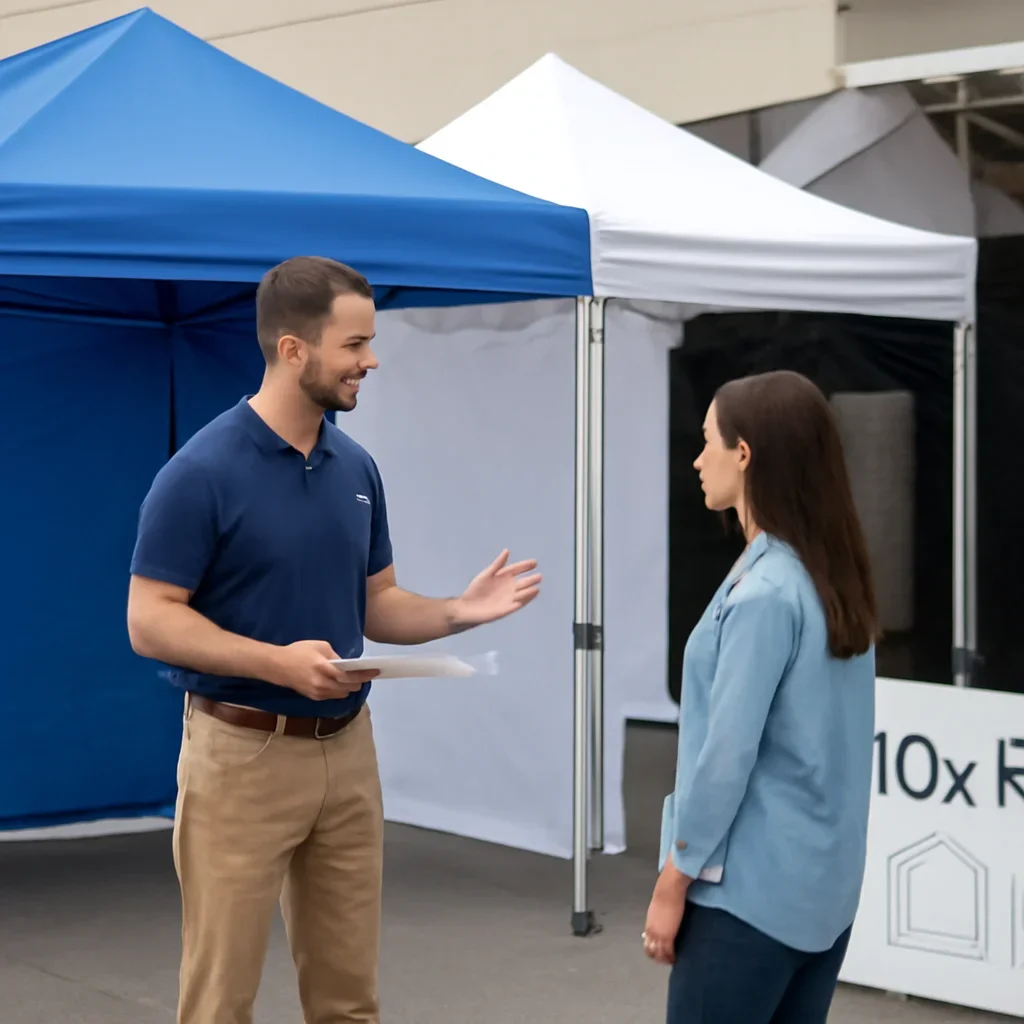
Why buyers add walls
Sidewalls help manage wind, light rain, privacy, product storage, and visual branding around the perimeter.

When you are comparing canopy tents with sidewalls, the important questions are fit, frame style, customization, and how the setup will be used in the field. This guide keeps those points together for Canadian buyers.

Sidewalls help manage wind, light rain, privacy, product storage, and visual branding around the perimeter.
Single back walls, half walls for counters, and fuller enclosed configurations depending on event type and weather.
Review weights and anchoring and artwork guidance before ordering.
Use this as a planning framework while narrowing the quote.
| Topic | Why it matters | Planning note |
|---|---|---|
| Back wall | Branding, storage, and backdrop control | Great for vendor booths and displays |
| Side wall | Weather buffer and privacy | Useful for wind direction and sun control |
| Half wall | Front counter feel | Common for markets and promotional setups |
Canopy Tents With Sidewalls should be reviewed in the context of the event, the footprint, and how often the setup will actually be used.
A better comparison usually happens when the size, frame, walls, branding, and delivery plan are all part of the same conversation.
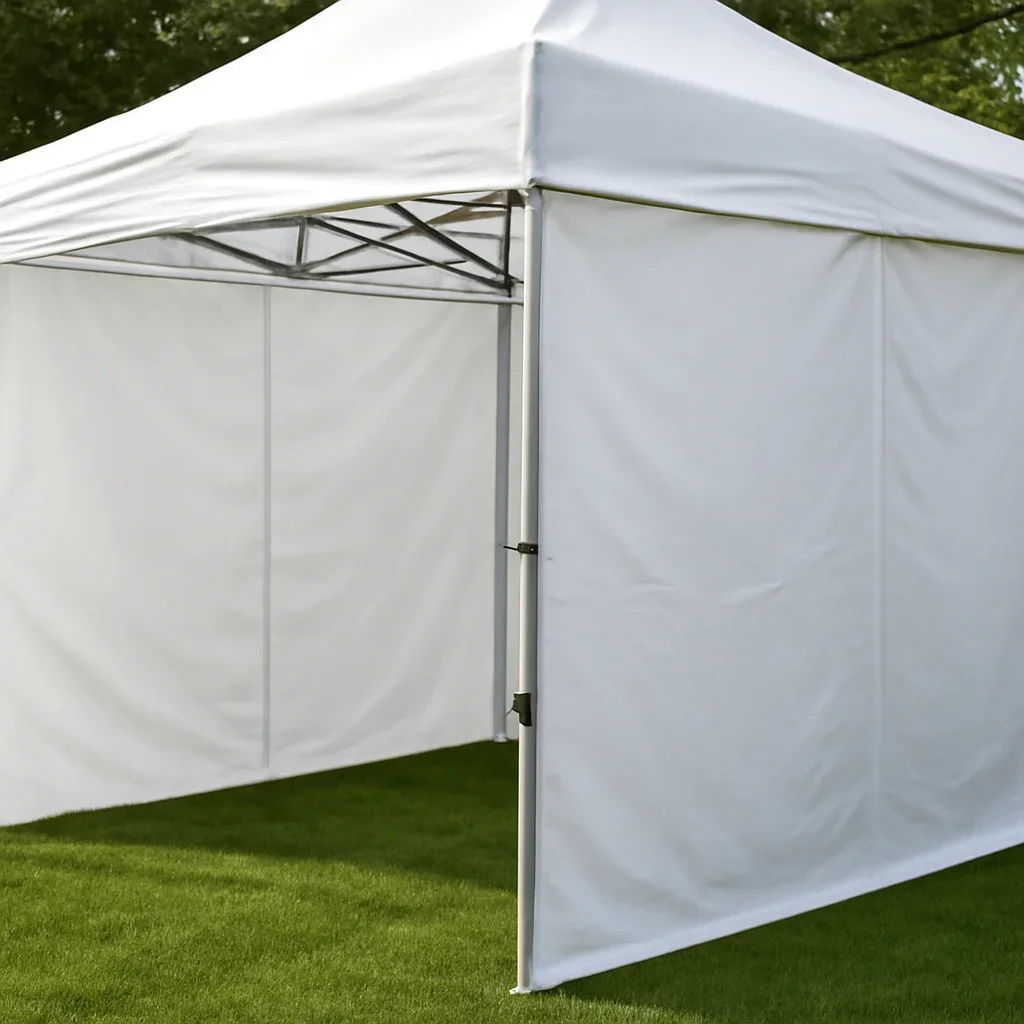
They often are when weather protection, storage, or branded backdrop space matters. The best setup depends on how open or enclosed you want the booth to feel.
Yes. Many buyers choose a back wall, one or two sidewalls, or a half-wall front depending on how the tent will be used.
They can. Added surface area can affect how wind moves around the tent, so anchoring and event-site rules should be part of the planning conversation.
Tell us what the tent is for, what needs to fit underneath, and whether the order is stock or custom printed.